
Govini Declares “Readiness Gap” a National Security Crisis at 2026 Reindustrialize Summit
PR Newswire
DETROIT, June 16, 2026
New research finds U.S. defense spending on readiness at nearly $700M a day, yet readiness continues to decline.
Govini becomes Air as the company launches Enterprise Readiness, a new category that enables defense leadership to continuously achieve readiness.
DETROIT, June 16, 2026 /PRNewswire/ — At the 2026 Reindustrialize Summit today, Govini CEO Tara Murphy Dougherty warned that the United States faces a growing “Readiness Gap,” a dangerous chasm between what the warfighter needs and what the national security enterprise can deliver, and announced a new category called Enterprise Readiness designed to close it.

During her keynote address, Murphy Dougherty described a defense enterprise increasingly strained by fragmented systems, disconnected industrial coordination, archaic workflows, and operational tempos that now outpace traditional procurement and sustainment models.
“In modern conflict, the frontline moves in seconds while the defense enterprise still responds in years,” said Murphy Dougherty. “Today, people close that gap through brute force and individual heroics. Their heroism keeps the enterprise running, but it is also the clearest signal the system itself is failing.”
Research released today by a leading global consultancy reveals that despite record defense spending, readiness continues to decline.
- US defense spending on readiness has reached nearly $700M a day, and yet:
- Development timelines have doubled. Major defense programs that once reached Initial Operating Capability (IOC) in roughly six years now take nearly 12 years.
- Production ramps take more than twice as long. Programs that once reached full-rate production in 3-5 years now routinely require 7-10 years, with some still not achieving full production after a decade.
- Nearly 75% of aircraft delayed in depot: Nearly 3 out of 4 Air Force aircraft entering depot maintenance are delayed—a rate that has risen from 31% to 73% in just five years, with over 10,000 parts waiting for repair.
Govini described the underlying cause of this Readiness Gap as a quagmire of tangled architecture, with industrial suppliers, government agencies, disconnected systems, regulations, and manual processes that prevent the defense enterprise from operating as a continuously coordinated system.
“Readiness depends on coordinated execution across industrial suppliers, defense primes, military operators, and federal agencies together, simultaneously, at the speed the mission demands,” Murphy Dougherty said. “Today, the architecture supporting that coordination does not exist.”
According to the company, Enterprise Readiness establishes readiness as “a real-time condition that is continuously achieved” rather than a static report, milestone, or periodic assessment.
To address the challenge, Govini formally introduced Enterprise Readiness, a new category of AI-native systems designed to continuously coordinate development, production, sustainment, and delivery across the defense industrial ecosystem.
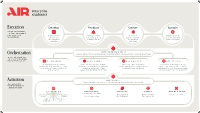
Govini also unveiled their Enterprise Readiness blueprint, built on a three-layer architecture of Execution, Orchestration, and Activation.
The Execution layer enables operators, logistics teams, sustainment organizations, suppliers, program offices, and leadership teams to execute from the same real-time operational understanding across the full defense lifecycle. The Orchestration layer coordinates execution through AI-driven workflows, operational reasoning, adaptive automation, and mobilized agents. The Activation layer establishes the Readiness Graph by integrating fragmented operational, industrial, supplier, and enterprise data into a continuously updated operational reality.
During the keynote, the company demonstrated operational scenarios showing how Enterprise Readiness enables:
- live operational consumption signals to trigger downstream industrial response,
- automated munitions replenishment analysis,
- predictive sustainment workflows,
- and real-time coordination across suppliers, operators, depots, and logistics systems.
Govini said the Enterprise Readiness platform is already deployed across critical U.S. defense programs including Patriot, F-35, Minuteman, B-52, F-16, SM-3, MK-48, the Coast Guard surface fleet, and the 8th Theater Sustainment Command. More than $140 billion in defense programs are currently managed within the platform.
Govini becomes Air
As part of the announcement, the company also revealed it is changing its corporate name from Govini to Air. According to Murphy Dougherty, the new name reflects the company’s evolution from a defense software provider into a continuously coordinated execution platform for national readiness.
“Over the past eight years, we transformed defense acquisition workflows through data, software, and operational coordination,” Murphy Dougherty said. “What we discovered is that acquisition problems are symptoms of a much larger systemic failure: the inability of the national security enterprise to continuously coordinate execution across suppliers, operators, agencies, and industry at the speed modern missions require.”
The company said the name Air reflects the role readiness plays across the defense enterprise: continuous, essential, and connective. “Readiness moves among suppliers, primes, operators, and agencies the way air moves through a room,” said JulieAnne Evanina, Chief Marketing Officer at Govini. “You cannot operate without it. And when it is working, you do not notice it at all.”
The announcement comes as policymakers, defense leaders, industrial suppliers, and technology companies increasingly focus on reindustrialization, contested logistics, munitions production, supply-chain resilience, and the ability of the United States industrial base to sustain prolonged operational conflict. Recent actions, including President Trump’s Executive Order, Modernizing Acquisitions and Spurring Innovation in the Defense Industrial Base, reflect a growing recognition that improving readiness requires more than better weapons—it requires modernizing the systems that develop, produce, sustain, and deliver them.
“The systems and weapons we build are already the best in the world,” Murphy Dougherty concluded. “The architecture behind them now has to become worthy of them.”
About Air
Air, formerly Govini, created Enterprise Readiness, a new category of AI-native systems that close the Readiness Gap, a dangerous chasm between what the frontline needs and what the national security enterprise can deliver.
The Air Enterprise Readiness platform aligns development, production, delivery, and sustainment into one coordinated execution system, revealing true capacity, exposing real constraints, coordinating critical resources, and executing at the speed of operational demands. The result: the national security enterprise has what it needs to succeed.
Media Contact: media@air.ai and air@weareinvariant.com
 View original content to download multimedia:https://www.prnewswire.com/news-releases/govini-declares-readiness-gap-a-national-security-crisis-at-2026-reindustrialize-summit-302801833.html
SOURCE Air


